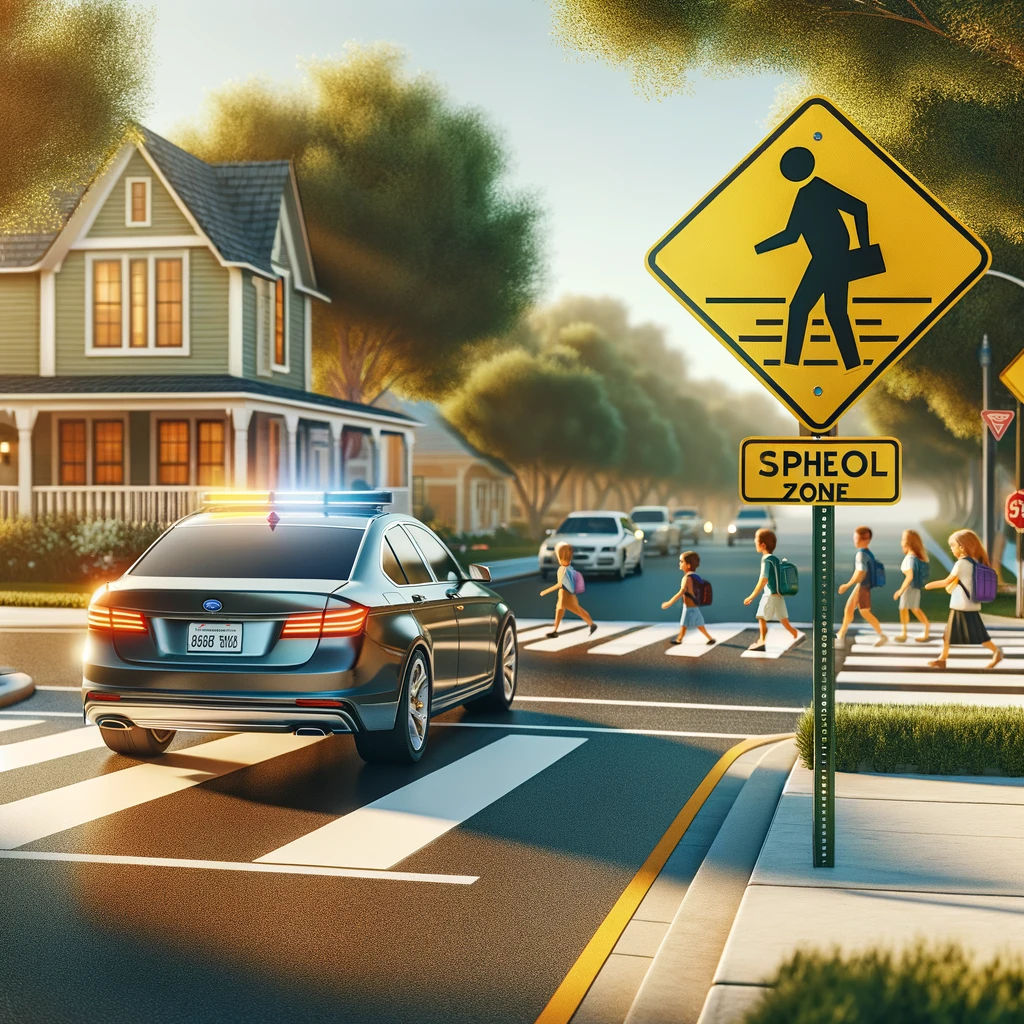
School zone traffic laws are designed to reduce the danger created when vehicles, children, school buses, bicycles, and crossing pedestrians share the same small area. There is no single nationwide school-zone speed limit. States and local governments establish the enforceable limits, operating hours, signage, and penalties that apply in a particular location.
How School Zone Speed Limits Work
School-zone limits are commonly lower than the normal posted speed for the surrounding road. Federal Highway Administration guidance notes that most states use school-zone limits between 15 and 25 mph in urban and suburban areas, although the exact rule depends on state and local law.
A reduced limit may apply only during posted school hours, when children are present, or while warning lights are flashing. Drivers should therefore read the entire sign rather than assuming the reduced limit is active all day.
Anyone comparing broader school-zone legal context should also remember that local signs and current state statutes control the actual duty on a particular road.
Drivers Must Watch More Than the Speedometer
Slowing down is only one part of school-zone driving. Drivers should actively watch crosswalks, sidewalks, driveways, crossing guards, bicycles, and children who may move unexpectedly near the roadway.
NHTSA advises motorists to follow school-zone speed limits, yield to pedestrians in crosswalks, and avoid passing school buses when their warning lights and stop arms require traffic to stop. Broader traffic-law reading can provide context, but the posted controls and applicable state law remain the starting point.
School Bus Stops Create Separate Duties
School-bus laws deserve special attention because they may apply outside a formally marked school zone. NHTSA states that all states require motorists to stop for a stopped school bus displaying flashing red lights with its stop signal arm deployed, although the detailed exceptions and roadway rules vary by jurisdiction.
NHTSA school bus safety guidance
Fines and Other Consequences Can Be Higher
A school-zone speeding ticket may carry consequences beyond an ordinary speeding citation. Depending on the jurisdiction, that can include increased base penalties, court costs, driving-record consequences, or automated-camera enforcement.
Some jurisdictions expressly increase penalties inside designated school zones. Washington, for example, provides enhanced penalties for certain school-zone infractions, illustrating why drivers should never assume an ordinary speeding fine applies everywhere.
Questions involving an accident may also bring driver responsibility topics into the discussion because a traffic citation and civil liability are separate legal issues.
| Situation | Driver Duty | Possible Issue |
|---|---|---|
| Reduced-speed sign active | Follow posted limit | Speeding citation |
| Pedestrian in crosswalk | Yield as required | Failure-to-yield violation |
| School bus displaying stop signals | Stop when state law requires | Serious traffic penalty |
| Crossing guard directing traffic | Follow lawful direction | Separate violation possible |
Mistakes Drivers Commonly Make
One frequent mistake is assuming a school zone begins only at the school entrance. Posted boundaries may extend farther along the roadway.
Another is relying on the regular speed limit because no children are immediately visible. If the reduced limit is legally active, a driver may still be cited. Drivers also should not assume that following another vehicle through a stopped school-bus area makes the movement lawful.
When Should You Get Legal Help?
Consider consulting a qualified traffic attorney if a school-zone citation could cause license suspension, employment problems, unusually high penalties, or allegations involving injury. Legal advice may also be useful when signage was obscured, the active hours are disputed, or an automated citation identifies the vehicle owner rather than the actual driver.
State and local rules control these issues, so the relevant statute and citation should be reviewed directly.
Frequently Asked Questions
Are all U.S. school zones limited to 20 mph?
No. School-zone limits vary by jurisdiction. Many fall between 15 and 25 mph, but the posted sign and applicable state or local law determine the enforceable limit at a specific location.
Can school-zone fines be higher than normal speeding fines?
Yes. Some jurisdictions authorize enhanced penalties for violations committed in designated school zones. The amount and conditions differ by state and locality.
Do drivers always have to stop for a school bus?
Drivers must follow their state’s school-bus stopping law. All states regulate stopping for buses displaying required red lights and stop signals, but exceptions can depend on roadway configuration and state law.
Treat Every School Zone as an Active Safety Area
A school-zone sign changes more than the number on the speedometer. Drivers must pay closer attention to pedestrians, buses, signals, crossing guards, and rapidly changing traffic conditions. Check the exact state and local rules when a citation or accident occurs rather than relying on assumptions from another jurisdiction.
This article provides general legal information and is not a substitute for advice from a qualified attorney.