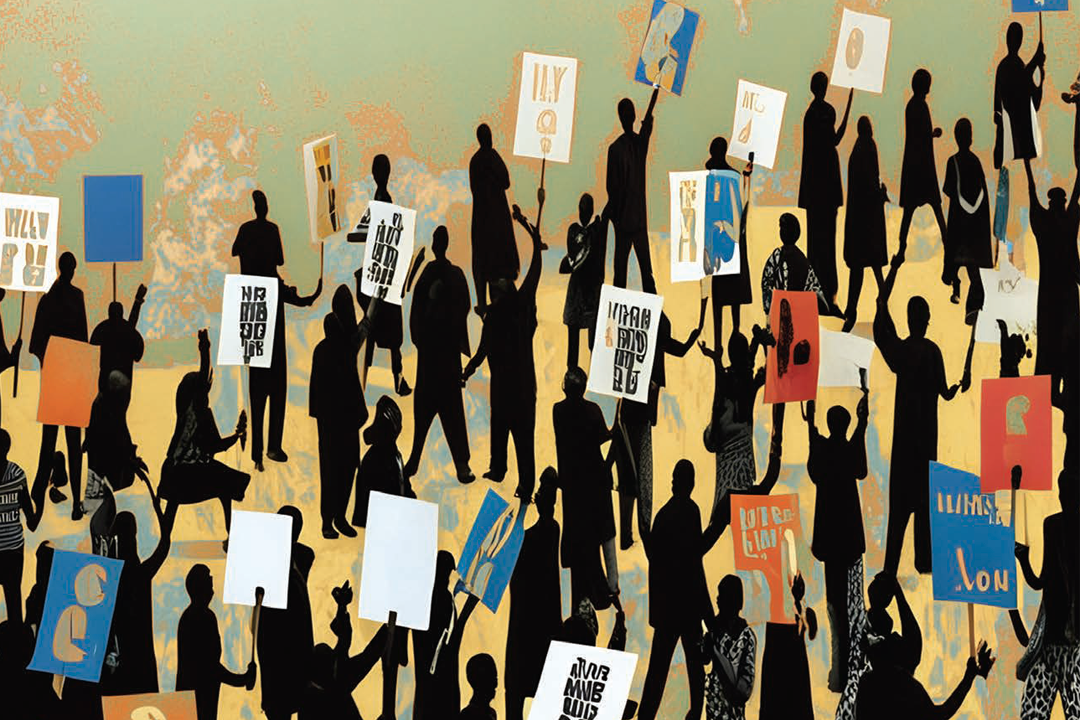
Student speech laws balance the constitutional rights of students against a public school’s responsibility to operate classes, protect students, and maintain an appropriate educational environment. The First Amendment applies to public schools, but students do not always have the same freedom to speak at school that adults have in ordinary public settings.
The legal result often depends on where the expression occurred, whether it was personal or school-sponsored, and whether it materially interfered with school operations or the rights of others.
The First Amendment Still Applies at Public Schools
The Supreme Court’s student-speech cases establish that attending a public school does not eliminate First Amendment protection. At the same time, schools possess authority that the government ordinarily would not have over adult expression in a public setting.
The Tinker framework permits regulation of student expression when school officials can satisfy the applicable standard involving material and substantial disruption or interference with the rights of others. The Supreme Court discussed that framework again in Mahanoy Area School District v. B.L.
Readers browsing general education discussions through Canadian current-affairs reading should remember that First Amendment rules discussed here concern U.S. constitutional law.
Not Every Type of Student Speech Uses the Same Rule
Context changes the analysis. Courts have developed different principles for personal student expression, school-sponsored publications or activities, certain vulgar school speech, and expression connected with illegal drug advocacy at school events.
That means a statement cannot be classified as protected or punishable simply because it was made by a student.
| Speech Context | Key Question | Possible Legal Issue |
|---|---|---|
| Personal on-campus speech | Is substantial disruption involved? | Tinker principles |
| School-sponsored expression | Does it appear connected to school curriculum? | Editorial authority |
| Off-campus personal speech | How strong is the school’s connection? | Reduced school authority |
| Threatening conduct | Does safety become involved? | Separate disciplinary concerns |
Health, lifestyle, and community platforms such as general Canadian resource pages may contain discussions about school experiences, but individual stories cannot establish the constitutional standard governing a U.S. public school.
Off-Campus Speech Receives Special Attention
Social media blurred the old line between speech inside and outside school. In Mahanoy, the Supreme Court held that a Pennsylvania public school violated a student’s First Amendment rights when it punished her for particular off-campus Snapchat posts. The Court stressed features of off-campus speech that can reduce a school’s regulatory interests, while declining to create an absolute rule protecting everything said away from campus.
Serious bullying, harassment directed at the school community, threats, or other circumstances may raise different questions. Location matters, but it is not necessarily the only factor.
School Rules Cannot Be Read in Isolation
A student handbook may prohibit disruption, harassment, threats, or misuse of school systems. Those rules still operate within constitutional limits at public schools.
General reporting from online Canadian news material can provide broader context about youth and digital expression, but a school’s disciplinary authority should be evaluated against controlling U.S. constitutional law, applicable circuit precedent, and state law.
Private schools generally present a different constitutional question because the First Amendment restricts government action. Contracts, handbooks, state statutes, accreditation rules, and other laws may still create rights or duties in private-school settings.
What People Often Get Wrong About Student Speech
A common claim is that students can say anything because the First Amendment applies at school. That is too broad. Public schools retain authority over several categories of school-connected expression.
The opposite claim—that administrators can punish any speech they consider inappropriate—is also too broad. School authority has constitutional limits. A disciplinary decision can turn on disruption, sponsorship, location, the audience, safety concerns, and the specific rule being applied.
When Should a Speech Dispute Get Closer Review?
A student or parent facing significant discipline may want to preserve the post, assignment, flyer, message, school policy, disciplinary notice, and communications with administrators. Context can matter as much as individual words.
Legal review may be especially useful when suspension, expulsion, exclusion from activities, compelled removal of material, or a lasting disciplinary record is involved. The governing federal appellate court may also have precedent applying Supreme Court cases to similar facts.
Frequently Asked Questions
Can a public school discipline a student for a social media post?
Sometimes. Off-campus status can reduce school authority, but it does not create automatic immunity. The content, connection to school, potential disruption, threats, harassment, and controlling court precedent can matter.
Does the First Amendment apply to private-school students?
Private schools ordinarily are not government actors, so the federal First Amendment generally does not apply in the same way. Other legal protections, school agreements, or state laws may still be relevant.
Can a school control a student newspaper?
The answer depends partly on whether the publication is treated as school-sponsored curricular expression or as an open forum for student speech. The publication’s history, policies, and level of school control can affect the analysis.
Preserve the Context Before Challenging Discipline
Student-speech disputes are highly fact-dependent. Save the original expression and the precise school rule before posts disappear or accounts change. Then compare the school’s stated reason for discipline with the applicable constitutional standard and local precedent. For substantial consequences, legal advice can help determine whether an internal appeal, administrative process, or court claim is appropriate.
This article provides general legal information and is not a substitute for advice from a qualified attorney regarding a specific situation.