
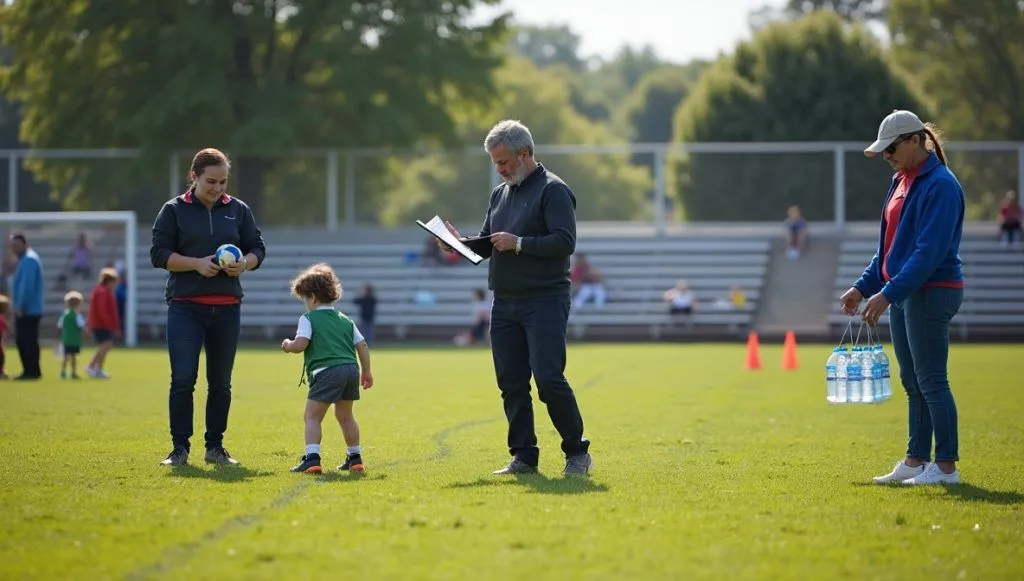
Community sports leagues depend heavily on coaches, referees, volunteers, parents, and local facilities. That informal structure does not eliminate legal responsibilities. Screening practices, abuse-prevention rules, insurance coverage, supervision standards, and incident procedures can all affect a league’s risk.
The exact requirements depend on the sport, state, governing organization, facility, and ages of the participants.
Volunteer Screening Requires More Than Collecting Names
Leagues working with children often use applications, identity checks, references, background screening, training, and written conduct policies. State laws and governing-body requirements can differ, so there is no single screening rule covering every community league.
Parents researching programs may encounter broader online content, but league policies should be checked against applicable laws and governing-body requirements. The U.S. Center for SafeSport identifies staff and volunteer screening, background checks, supervision, training, and reporting procedures as important questions for youth programs.
Federal law also creates specific protections in covered amateur athletics. The Protecting Young Victims from Sexual Abuse and Safe Sport Authorization Act was enacted in 2018 and addresses prompt reporting of suspected sexual abuse in covered settings. Its scope should not be assumed to include every local recreational league in exactly the same way.
Insurance Should Match the League’s Actual Activities
General liability insurance can address certain injury and property claims, while participant accident coverage may respond differently. Depending on the organization, directors and officers coverage, workers’ compensation, commercial auto insurance, or abuse and molestation coverage may also deserve review.
League administrators reading event-planning articles should compare those general ideas with the terms of their own policies. Exclusions, deductibles, covered locations, insured persons, and notice requirements can matter after an incident.
| Risk Area | Possible Protection | Key Question |
|---|---|---|
| Participant injury | Accident/liability coverage | What injuries are covered? |
| Volunteer conduct | Screening and policies | Who must be screened? |
| Governance claims | D&O coverage | Are board members protected? |
Participant Safety Depends on Daily Procedures
Written rules matter only when coaches and volunteers understand how to apply them. Leagues may need procedures for equipment checks, weather, heat, concussions, transportation, locker rooms, communications with minors, medical emergencies, and reporting misconduct.
Public discussion through local news pages can highlight sports-safety incidents, but another league’s response should not substitute for the policies required by the organization’s own insurer, facility, governing body, and applicable law.
Clear incident documentation is also valuable. Serious injuries, behavioral complaints, suspected abuse, and unusual safety events should be handled under established reporting procedures rather than informal conversations alone.
Where Community Leagues Often Go Wrong
A common mistake is assuming that unpaid volunteers create no legal risk. A volunteer can still interact with children, drive participants, operate equipment, control practices, or make safety decisions.
Another problem is relying on a background check as the entire protection system. Screening cannot replace supervision, conduct rules, reporting procedures, training, and appropriate responses to complaints.
When Legal Advice May Be Needed
A lawyer may be useful when a league receives an allegation of abuse, a serious injury claim, a subpoena, an insurance denial, or a dispute involving a coach or volunteer.
Legal review can also help when drafting participation waivers, volunteer agreements, disciplinary procedures, facility contracts, or policies involving minors. State reporting obligations can be especially important when allegations concern child abuse.
Frequently Asked Questions
Are background checks legally required for every sports volunteer?
Not under one universal nationwide rule. Requirements can depend on state law, the organization, the governing body, the facility, and the volunteer’s responsibilities.
Does a waiver eliminate a youth league’s liability?
No. A waiver may address certain risks, but its enforceability depends on applicable law and circumstances. Rules involving minors can differ significantly among states.
What insurance does a community sports league need?
Coverage depends on the activities and organization. General liability and participant accident policies are common starting points, while other risks may require additional coverage.
Make Safety Part of League Administration
Community sports work best when safety responsibilities are defined before an incident forces people to interpret them under pressure. Screening, supervision, reporting, insurance, and recordkeeping should function as one system rather than separate paperwork exercises.
That approach protects participants while giving volunteers clearer boundaries for performing their roles responsibly.
This article provides general legal information and is not a substitute for advice from a qualified attorney.


